
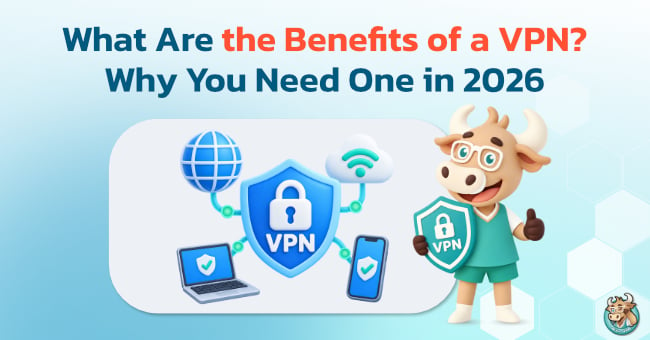
Many people have heard of a VPN (Virtual Private Network), but they may still wonder what a VPN actually is and what else it can do besides changing an IP address to access content from other countries.
Today, we use the internet for almost everything, from work and online banking to entertainment and travel. As a result, a large amount of personal data is constantly transferred across networks. VPN technology helps improve online privacy by encrypting connections and routing internet traffic through a VPN server before reaching the internet.
In this article, we will explain in simple terms what a VPN is used for, how a VPN works, why a VPN is useful, and who can benefit from using one, along with 8 practical examples of VPN usage in everyday life.
What Is a VPN and How Does It Work?
For those who are unfamiliar with what is VPN, a VPN is a technology that creates an encrypted connection between your device and a VPN server before sending your data to the internet.
When you enable a VPN, data from your smartphone, computer, or other devices is encrypted and sent to the selected VPN server first. The VPN server then forwards your request to the destination website or online service on your behalf and sends the response back through the encrypted connection.
Through this process, websites and online services typically see the IP address of the VPN server instead of your actual network IP address. This helps reduce direct exposure of your network information and improves privacy while browsing online.
Simply put, a VPN works as an intermediary between your device and the internet while adding an extra layer of encryption to your connection.
8 Benefits of a VPN and Real-World Use Cases
1. Access Home or Organization Networks Remotely
One of the original purposes of VPN technology is allowing users to securely connect to internal networks from outside locations.
For example, employees working remotely may need to access company systems, or users may want to connect to devices within their own private network while away from home.
This type of connection helps protect data by transmitting information through an encrypted channel. However, it should be used together with proper authentication systems and other security measures provided by the organization.
2. Improve Privacy and Hide Your IP Address
When browsing the internet normally, websites can see the Public IP Address of the network you are connected to. However, when your traffic is routed through a VPN server, websites will typically see the VPN server’s IP address instead.
Hide IP Address can help reduce exposure of your approximate network location and provide more privacy while browsing online.
However, hiding your IP address does not mean you become completely anonymous or impossible to track. Websites may still use other information, such as cookies, account data, browser fingerprinting, or other tracking methods to identify users.
3. Improve Security When Using Public Wi-Fi
Public Wi-Fi at airports, hotels, coffee shops, or other shared locations is convenient, but networks that you do not control may come with security risks.
A VPN helps encrypt data between your device and the VPN server, making it more difficult for others on the same network to intercept your traffic — especially when connecting to unfamiliar networks.
If you frequently use internet connections outside your home, it is important to understand the risks of using public Wi-Fi and combine VPN usage with other security practices such as HTTPS, Two-Factor Authentication (2FA), and keeping your operating system updated.
4. Access Region-Restricted Content and Services
Another reason many people ask “What is a VPN used for?” is accessing websites or online services that are available only in certain countries.
When you connect to a VPN server in a specific location, the destination service may see an IP address from that country instead. This can be useful for researching information, accessing essential services while traveling, or unblock website on certain networks.
However, access to online services still depends on each platform’s policies, terms of service, and the laws of each country. Users should always review the applicable terms and conditions before using a VPN for this purpose.
5. Reduce the Impact of Certain Types of Traffic Restrictions in Some Cases
On some networks, internet service providers may manage or limit certain types of traffic. Encrypting your connection through a VPN can prevent providers from seeing traffic details in the same way as a direct connection.
However, a VPN cannot increase your internet speed beyond your current plan and does not make your connection faster in every situation. Actual performance still depends on factors such as the distance to the VPN server, server load, network quality, and the routing path between your device and the destination.
6. Use Entertainment and Online Services from Different Countries
One of the most familiar benefits of a VPN is using online services such as streaming platforms, games, websites, or applications that provide different content and features depending on the country.
For example, Thai users traveling abroad who want to access online services they normally use in Thailand may choose to connect to a Thailand VPN server before accessing those services.
However, content availability and access through VPN connections depend on each platform’s policies and service agreements. Therefore, VPN usage does not guarantee that every service will always be accessible.
7. Improve Connection Routing for Online Gaming in Certain Situations
For gamers, questions about “What can a VPN help with?” are often related to ping, routing, and connections to overseas game servers.
In some situations, if the connection route between an internet provider and a game server has performance issues, choosing a different route through a VPN server may help improve connection stability.
However, this does not mean a VPN will reduce ping for every game or every network. Routing traffic through an additional server can also increase latency in some cases.
Users should test different server locations and choose a suitable VPN protocol based on their device, speed requirements, and usage patterns.
8. Enjoy More Flexible Internet Access While Traveling
When traveling abroad, some online services that you normally use may not work the same way as they do at home, or local networks may have different restrictions.
Preparing a VPN before traveling can provide more flexibility when connecting to the internet, especially when using hotel Wi-Fi, airport networks, coffee shop Wi-Fi, or other networks that you do not control.
So, how is a VPN useful for travelers?
The main benefits include improving connection privacy, reducing exposure of your real IP address to websites in many cases, and providing more flexibility when accessing online services while abroad.
How Is a VPN Useful and Who Should Use One?
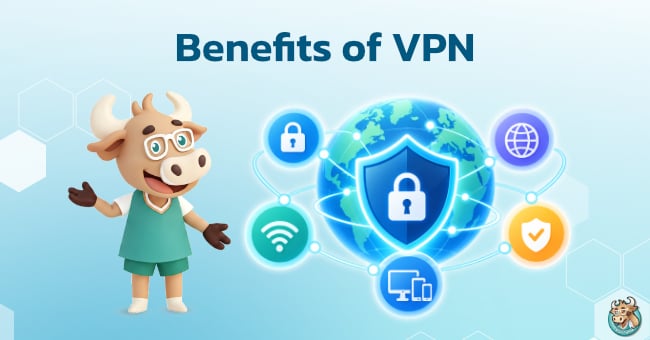
If we summarize what a VPN helps with in the simplest way, it provides three main benefits:
- Improved online privacy
- More secure internet connections
- Greater flexibility when using online services
A VPN is suitable for people who frequently use public Wi-Fi, work remotely, travel internationally, access online services from different countries, or prefer not to reveal their real IP address every time they go online.
However, a VPN cannot replace antivirus software, password managers, or Two-Factor Authentication (2FA). Good online security requires multiple protection methods working together.
What to Consider When Choosing a Good VPN
Although VPNs provide many benefits, choosing a trustworthy VPN provider is important because your internet traffic passes through the provider’s infrastructure before reaching the internet.
Clear Privacy Policy
Users should review the provider’s Privacy Policy and logging practices to understand what information is collected, how long it is stored, and how it is used.
Do not rely only on the term “No-Log” when choosing a VPN. Always read the provider’s privacy policy carefully to understand the details.
Support Modern VPN Protocols and Security Standards
A good VPN service should support modern VPN protocols such as WireGuard, OpenVPN, or IKEv2.
Having multiple protocol options allows users to choose the most suitable option based on their device, speed requirements, stability, and usage scenarios.
Have Servers and Locations Suitable for Your Needs
A larger number of servers does not always mean a VPN is better for everyone.
A more important factor is whether the provider offers servers in the countries or regions you actually need, along with reliable performance and stable connections.
Reliable Customer Support
VPN services involve multiple factors, including operating systems, networks, devices, and online platforms.
Having a support team that can help troubleshoot connection issues is another important factor when choosing a VPN provider.

For those looking for an easy-to-use VPN service that supports various use cases, BullVPN is another option for improving privacy, traveling, entertainment, and accessing the internet from different locations.
BullVPN offers more than 300 servers across 49 countries and supports Windows, macOS, iOS, Android, Chrome Extension, and Android TV.
It also supports multiple VPN protocols, including WireGuard, OpenVPN, and IKEv2, allowing users to choose the most suitable connection based on their needs.
With customer support available to assist when issues occur, BullVPN helps users stay connected with greater privacy, security, and flexibility, whether they are using the internet at home, working remotely, or traveling abroad.
How to use BullVPN
1. Register: www.bullvpn.com/signup
2. Download BullVPN Client: www.bullvpn.com/setup
- BullVPN Windows
- BullVPN iOS (iPhone & iPad)
- BullVPN Android
- BullVPN Mac
- BullVPN Chrome Extension
- BullVPN Android TV
3. Connect BullVPN Client

Why use BullVPN?
✅ Hide your IP address.
✅ Access blocked websites.
✅ VPN servers in 300 Servers in 49 countries.
✅ Lag reduced and ping Games.
✅ Supports Windows, Mac, iPhone, Android, Chrome Extension, Android TV.
✅ Trusted by over a hundred thousand users worldwide.