
In an era where almost all data is transmitted over the internet, data security has become something that cannot be overlooked. Cyber threats continue to evolve, and sending information without proper protection can make sensitive data easier for malicious actors to access. One important process that helps address this issue is encryption, which converts readable information into an unreadable coded format. This article will explain the encryption and decryption process in detail, helping you understand how this technology protects data and enhances online security.
What is Encryption?
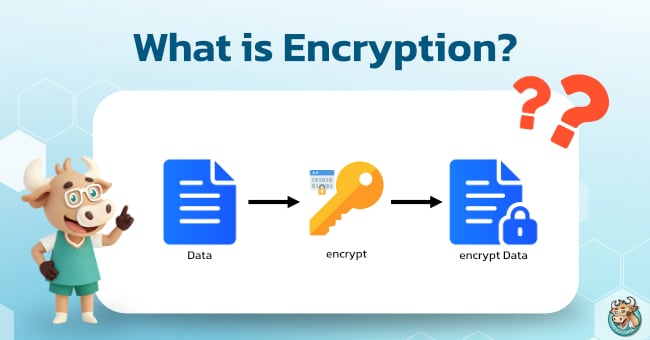
When discussing cybersecurity, one of the first questions commonly asked when learning about networks is: What is encryption? In its basic definition, encryption is the process of encoding data by taking readable raw information, known as plaintext, and processing it through mathematical methods or algorithms to convert it into an unreadable format called ciphertext.
The main reason data should be encrypted before being transmitted over a public network is to prevent third parties or hackers who may intercept the data in transit from understanding its contents. Encryption works like placing important documents inside a tightly locked safe. Even if the safe is stolen, anyone without the correct password still cannot access the documents inside. For this reason, encryption is considered one of the most effective first layers of data protection.
What is Decryption?
Once data has been encrypted for security, how can the intended recipient read it? The answer lies in decryption, the process of converting encrypted data back into its original, readable form. Decryption works in the opposite direction of encryption.
During the decryption process, encrypted data (ciphertext) is decoded using the correct cryptographic key. When the decryption key matches the requirements of the encryption algorithm, the ciphertext is transformed back into its original readable format (plaintext), allowing the recipient to access and use the information normally. Without the correct decryption key, the encrypted data remains unreadable and cannot be interpreted or used.
Difference Between Encryption and Decryption
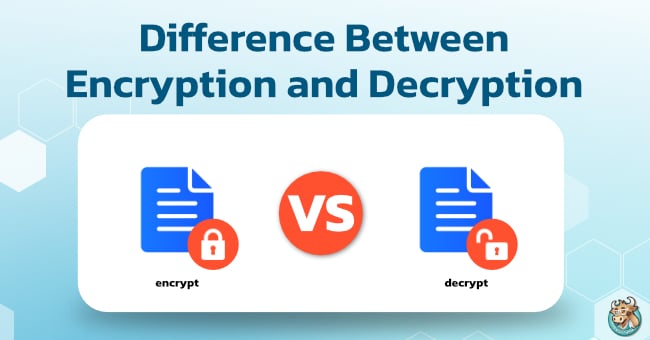
To provide a clearer overview, the difference between encryption and decryption can be explained through their functions and purposes. Encryption is the process of hiding or locking data, usually performed on the sender’s side before the information is transmitted across an unsecured network.
Decryption, on the other hand, is the process of unlocking that data. It typically takes place on the receiver’s side, allowing the protected information to be converted back into a readable format. Encryption and decryption are complementary processes that must work together. Even if a system uses strong encryption standards, the overall security can still be compromised if the decryption key is leaked. Therefore, encryption and decryption must be properly aligned to provide maximum data security.
How Does Encryption Work in IT?
Encrypting data for transmission over a network involves advanced standards and complex algorithms. In general, encryption methods are divided into two main types based on how cryptographic keys are used for encryption and decryption.
1. Symmetric Encryption
Symmetric encryption is a method that uses the same key for both encryption and decryption. This means the sender and receiver must agree on and securely hold the same secret key.
The main advantage of symmetric encryption is speed. The encryption process is fast and requires fewer computing resources, making it suitable for encrypting large amounts of data. However, its key challenge is secure key exchange. If the secret key is stolen during transmission, hackers may be able to decrypt all protected data immediately.
2. Asymmetric Encryption
Asymmetric encryption was designed to reduce the risks involved in sharing encryption keys. This method uses a pair of keys: a public key and a private key.
The process works by having the sender encrypt the data using the receiver’s public key. Once the data reaches its destination, only the receiver’s private key can be used to decrypt it. This method provides a high level of security and is commonly used in financial transactions and secure websites that rely on HTTPS.
Benefits of Encryption and Decryption in the Digital Age
Encryption and decryption are not only important for system engineers; they also directly affect every internet user. The most obvious benefit of encryption is protecting personal data privacy, such as passwords, credit card information, and private chat messages.
Encryption also helps businesses comply with international standards and personal data protection regulations. Having reliable encryption and decryption processes builds trust, helps prevent data tampering, and makes the online world a safer space for everyone.
How Does a VPN Relate to Encryption and Decryption?
For anyone using the internet over public networks, a VPN (Virtual Private Network) is one of the most effective ways to apply encryption and decryption in everyday use. When you connect to a VPN it creates a secure tunnel and encrypts all data transmitted through your connection. This means that even if hackers intercept your traffic on public Wi-Fi, they cannot read your information.
In addition to encrypting your data, a VPN helps conceal your real IP address by replacing it with the IP address of the VPN server. This improves your online privacy, reduces the risk of tracking, and may allow you to access content that is unavailable in your region. If you're wondering what is VPN from a security perspective, it is a tool that protects your online activities through advanced encryption while helping you hide your IP address. If you're looking for a VPN that is easy to use and built with strong security in mind, BullVPN provides reliable encryption technology to help protect your data and privacy across every connection.

Conclusion
Encryption and decryption are fundamental technologies that form the foundation of modern cybersecurity. Encryption converts readable data into an unreadable format to protect it from unauthorized access, while decryption restores the data so that authorized recipients can access it safely. Understanding both symmetric encryption and asymmetric encryption provides valuable insight into how sensitive information is protected online.
For everyday users, choosing a trusted VPN with strong encryption is one of the simplest and most effective ways to protect personal privacy, secure online communications, and Hide IP Address while browsing the internet.

Get started with BullVPN in 3 steps
✅Download and Setup
BullVPN is available for Android, iOS, Windows, macOS, Chrome Extension and Android TV
✅Open the application, log in and select the server
More than 300 Servers are available in 49 countries around the world
✅Connect successfully can be used immediately
After successfully connecting BullVPN, you can access your data freely, without limits