

Imagine a typical workday morning: you receive an email from a top executive ordering an urgent wire transfer to close a major deal. The email contains the correct name and signature, leaving you with almost no suspicion and ready to comply immediately. But wait... this could be a trap set by hackers to deceive you. Current statistics reveal that over 90% of cyber threats start with alarmingly realistic Phishing Email. What you might be facing is a targeted attack known as Spear Phishing. In this article, we will dive deep into what Spear Phishing is, explore its attack patterns, and learn how to protect ourselves from this silent threat.
What is Spear Phishing?
Spear Phishing is a type of phishing cyberattack that is highly targeted. Unlike sending out random, generalized messages, hackers do their homework thoroughly before making a move. They meticulously research the victim's personal information, whether it's data from social media, colleagues' names, job titles, or current projects the victim is working on.
Once all the information is gathered, hackers use it to craft deceptive emails or messages tailored specifically for the victim. These messages appear incredibly convincing, making the victim believe they are genuine and ultimately lowering their guard. This is exactly why Spear Phishing is a severe threat that even IT professionals can easily fall victim to if they aren't careful.

The Main Goals of Spear Phishing
The primary targets of cybercriminals in this type of attack are usually high-value assets. These include corporate network passwords, financial data, trade secrets, or tricking victims into wiring massive amounts of money directly to the criminals.
What is the Difference Between Spear Phishing and Phishing?
Many people may confuse these two terms. To provide the clearest picture, understanding the difference between Spear Phishing vs Phishing comes down to their target selection methods and the deceptive content they use, as illustrated in the table below.
|
Comparison Point |
Phishing |
Spear Phishing (Targeted) |
|
Target |
Non-specific (Mass Targeting), hoping to catch anyone. |
Specifically targets a clear individual or organization. |
|
Information Gathering |
Minimal to no prior research on the target. |
In-depth research on the victim before attacking. |
|
Message Content |
Generic, e.g., "Your bank account has been suspended." |
Personalized with the victim's name, role, or specific known details. |
|
Likelihood of Believing |
Relatively low (most people can usually spot it). |
Very high (content is highly realistic and convincing). |

General Phishing (Casting a Wide Net)
Phishing is like casting a wide net into the ocean. Hackers randomly send emails or messages to tens or hundreds of thousands of people using broad, non-specific content. Their only hope is that out of that massive number, someone will fall for the trick, click the link, and hand over their information.
Spear Phishing (The Targeted Spear Approach)
In contrast, Spear Phishing is like using a spear to catch a specifically chosen fish. It aims directly at a particular individual or organization. The content is highly personalized and tailored specifically for that victim. This is the core difference between Spear Phishing and general Phishing; because of this increased level of realism, the chances of the victim falling for the scam are significantly higher.
Common Types of Spear Phishing Attacks
Once you understand what Spear Phishing is, the next step is knowing how it works. Understanding the methods behind a Spear Phishing attack will help keep you safe. Here are some of the most common real-life situations
CEO Fraud / Business Email Compromise (BEC)
This form of Spear Phishing causes the most significant financial damage. Hackers spoof emails to appear as if they are from a top-level executive (CEO). They then send urgent instructions to the accounting or finance department, ordering a wire transfer to a vendor or partner's account (which is actually the attacker's fraudulent account). These requests often emphasize extreme urgency or strict secrecy to prevent the victim from double-checking.
Impersonating a Business Partner or IT Department
Hackers may send messages pretending to be the company's IT support team or a trusted business partner. They often alert employees to urgently update their systems or fix an account issue, providing a link to a fake website that looks identical to the real one. If an employee mistakenly enters their Username and Password, the hacker instantly gains unauthorized access to the system's data.
Using Malicious Attachments
Another dangerous Spear Phishing tactic involves sending email attachments with enticing names related to the victim's specific job role, such as "Latest_Salary_Structure.pdf" or "Revised_Quotation.xlsx." In reality, these files have Malware or trojans hidden inside. If the victim accidentally opens the file, their computer instantly becomes infected with a virus, allowing the attacker to breach the system.
How to Protect Yourself and Your Organization from Spear Phishing
No matter how sophisticated a hacker's techniques may be, preventing a Spear Phishing attack is entirely possible as long as strict security practices are in place.

Verify the Sender Carefully
Never trust just the display name on your screen, as anyone can easily spoof this. Always check the actual email address to verify if the domain name is spelled correctly and matches the organization's official domain. Hackers often use slight spelling variations or swap small letters to deceive your eyes.
Avoid Clicking Links or Downloading Unverified Files
If you receive an email with unusual requests, especially those involving money, passwords, or downloading critical files, always pause and think first. You should verify the request through another communication channel, such as calling the referenced person directly to confirm its legitimacy before taking any action.
Promote Cybersecurity Awareness
Organizations should prioritize regular employee training to keep them informed about Spear Phishing. Learning about new hacker tactics and conducting simulated phishing email tests will help build immunity and turn caution into a daily habit.
In summary, Spear Phishing is a cyber threat that is far more stealthy and dangerous than it seems, primarily because criminals use our real data to fabricate believable stories. Mindfulness and careful verification before clicking links or transferring money are your best shields.
Moreover, preventing your personal data from falling into the hands of hackers is equally important. To effectively mitigate Public Wi-Fi risks where cybercriminals often intercept data to craft targeted Spear Phishing attacks using a VPN is essential. If you need a trusted partner to safeguard your online privacy, BullVPN offers a fast and highly secure Virtual Private Network. By encrypting your data and masking your identity, it prevents data interception, empowering you to browse and work online with absolute confidence, free from the worry of modern Cyber threats.
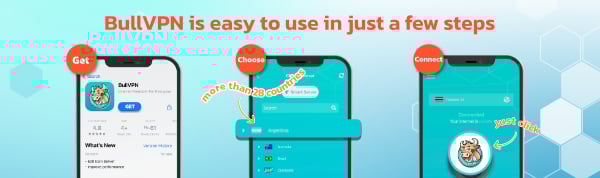
Get started with BullVPN in 3 steps
✅Download and Setup
BullVPN is available for Android, iOS, Windows, macOS, Chrome Extension and Android TV
✅Open the application, log in and select the server
More than 300 Servers are available in 49 countries around the world
✅Connect successfully can be used immediately
After successfully connecting BullVPN, you can access your data freely, without limits